

In the history of any company, certain milestones define its trajectory and are worth celebrating: incorporation, those first few sales, and a major growth phase or contract that helps secure the organization’s future.
Another defining moment is recognition for adhering to a major industry standard. In December 2025, Nomad GCS achieved certification of conformance to International Organization for Standardization (ISO) 9001:2015 for the sale, design, manufacturing, and service of its Connected Mobile Operations Centers (CMOCs). With this accomplishment, Nomad completed a comprehensive review of its processes and company culture, demonstrating that its quality management meets stringent international requirements.
Why ISO 9001 Matters
ISO 9001 is the international standard for a Quality Management System (QMS), designed to help organizations meet customer and regulatory requirements while driving continuous improvement. ISO 9001:2015 is the most current version of this standard.
The benefits of ISO 9001 are well documented. Key outcomes include:
-
Improved customer satisfaction
-
Enhanced organizational reputation and credibility
-
Greater operational efficiency
-
A framework for continuous improvement
In practical terms, ISO 9001 tells customers that Nomad has doubled down on its commitment to quality and improvement. These principles have long been part of Nomad’s Core Values. Certification makes that commitment documented, verifiable, and measurable.
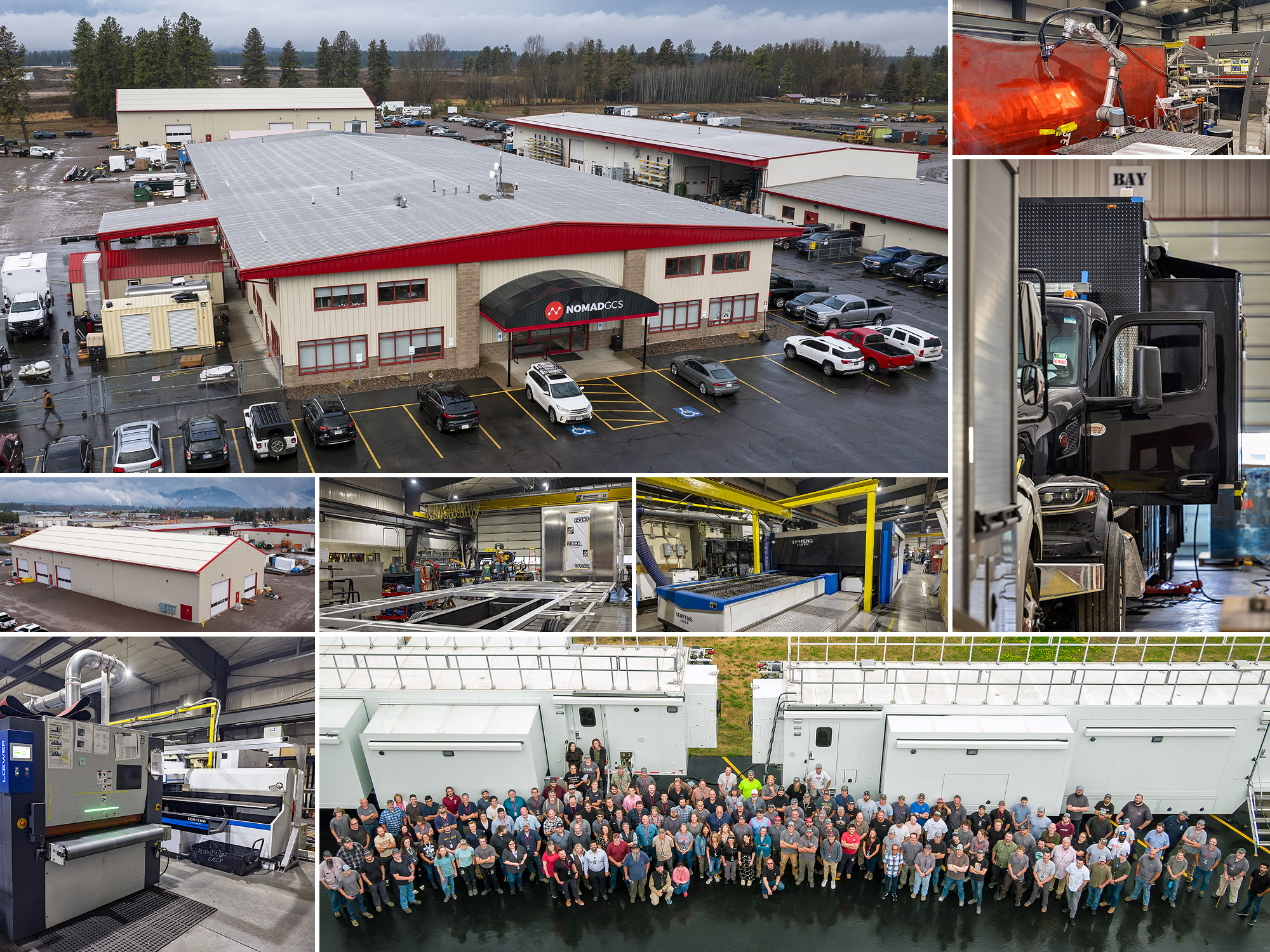
The Customer Comes First, Always
The focus has always been on the customer’s mission: what they do, why it matters, and how Nomad can support their success. In the company’s early days, this focus was personal. Every employee had direct visibility into the end result and a vested interest in delivering a quality product. Growth changed the means, but not the goal.
Nomad CEO Will Schmautz, one of the company’s four original founders, has a unique perspective on this evolution.
“In the early days, everyone had complete visibility into the operation. As we’ve grown to more than 400 people, we’ve had to formalize processes to maintain quality across teams. But the goal hasn’t changed: do it right, do it well, and make sure the customer succeeds.”
At scale, quality still begins with a deep understanding of customer operations, but achieving consistency required formal definition through ISO 9001. The process starts in Sales, where customer requirements are carefully matched to Nomad’s capabilities. Kristin Ahonen, Nomad’s Senior Director of Sales and Marketing, explains:
“Our customers work in environments where our products can’t fail. From the beginning, they expect a quality project proposal that is technically vetted and accurately quoted. This is a demonstration of our commitment to the customer’s mission. On our side, proposals must be strategic, persuasive, and priced to win. By codifying process, both the customer and downstream Nomad engineering and manufacturing departments experience frictionless sales.”
On the other end of the customer journey, delivering a well-engineered, high-quality apparatus drives satisfaction with the finished product. A logical, disciplined process—from sales order to requirements vetting, engineering to design approval, fabrication to production and integration—supports a positive customer experience throughout what is often a 12- to 18-month relationship.
Quality is not isolated within a single department at Nomad; it is embedded throughout the organization. Quality Assurance Manager Tami Woolston explains:
“ISO 9001 provides a solid foundation for sustained success by embedding quality into everything we do. Quality Assurance isn’t just a department within Nomad; it’s a company-wide mentality.”
Nomad’s QMS, validated through the ISO 9001 audit process, emphasizes reliability from the outset. By building quality assurance into the front end of manufacturing, efficiency and accountability become cultural norms. On the back end, quality control verifies that processes support consistent, reliable, and scalable production. The result is timely delivery, satisfied customers, repeat orders, and referrals, all of which creates a positive feedback loop for continuous improvement.
The Team Mentality
Preparing for an independent ISO 9001 audit was not simply an exercise in documentation. It represented a fundamental organizational shift. For a company built on engineered-to-order and mission-driven solutions, scaling to consistent, repeatable processes while preserving the flexibility of custom products required learning and adaptation.
Nomad’s employees and craftspeople focused on standardizing the systems that support every build, regardless of customization. As a result, teams now place equal emphasis on process and product, reinforcing the foundations needed for measurable and scalable quality assurance.
Woolston reflects on the collective effort behind the achievement:
“It would not have been possible without the collective effort, dedication, and teamwork of so many individuals across the organization. This accomplishment reflects countless hours of collaboration, problem-solving, and commitment to doing things the right way. Each contribution, whether refining processes, documenting procedures, participating in audits, or supporting one another through the journey, played an essential role in reaching this goal.”

Change Is Good
ISO 9001 certification does not evaluate products or services directly. Instead, it measures the effectiveness and consistency of processes, with the understanding that repeatable production leads to reliable quality outcomes. Documenting those processes—and training both new and experienced employees to the same standard—was a cornerstone of Nomad’s transformation leading up to the audit.
Nomad remains a “roll up your sleeves and get it done” organization. ISO 9001 does not change that mindset. Instead, traceable and repeatable steps reinforce it. The same sense of urgency remains, now paired with a strengthened emphasis on quality assurance and continuous improvement.
Woolston adds:
“ISO 9001 provides a solid foundation for sustained success by embedding quality into everything we do. It reinforces our commitment to quality, consistency, and continuous improvement. This strengthens our ability to meet customer expectations, operate efficiently, and scale responsibly.”
Not Just a Box to Check
ISO 9001 is not a one-time achievement. It is an ongoing commitment to improvement, measured over time, with customer satisfaction as the ultimate benchmark.
Schmautz summarizes it clearly:
“In the end, it’s about making sure the customer succeeds in their mission. That means delivering solutions that meet requirements, perform reliably, and arrive when they need it. When we do that, our customers can do their jobs with confidence. We will get it right because we have to. There’s no other option.”
Nomad has always measured success through quality and consistency. Achieving ISO 9001:2015 certification makes that commitment visible, repeatable, and accountable—not only for customers and partners, but across the organization itself. This milestone is not a finish line. It is the standard Nomad works toward, every day.

Note: The lead image of this article is illustrative and AI-augmented